Resume and Cover Letter: Key Differences + When to Use Each (2026 Guide)
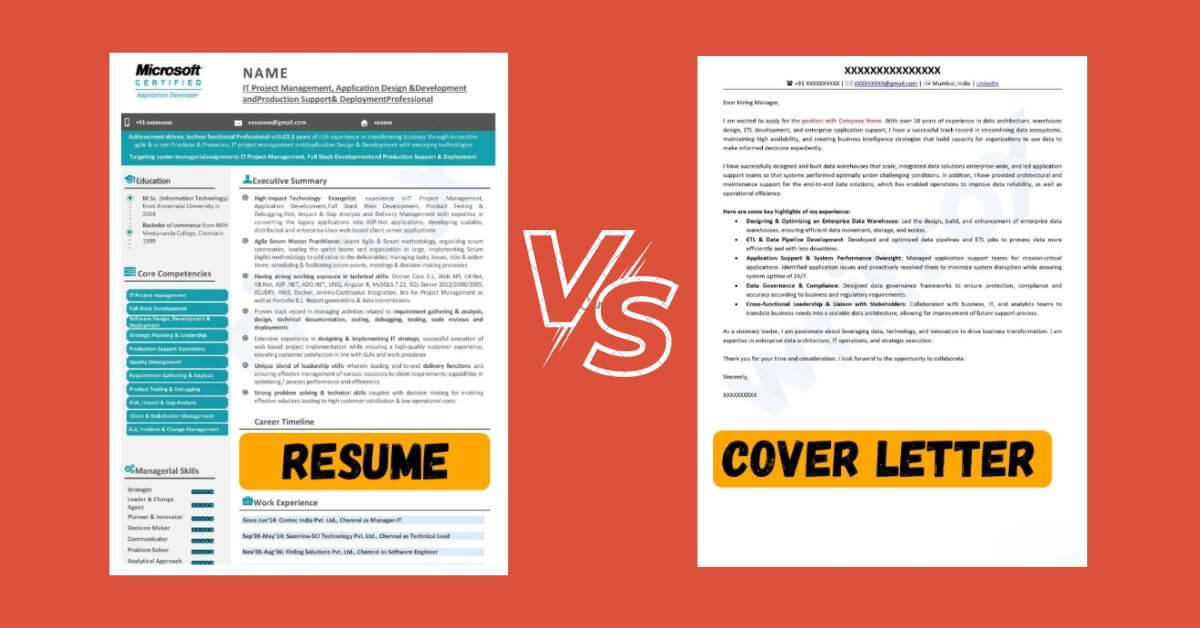
Confused about the difference between your resume and cover letter? You’re not alone. Many job seekers struggle to understand what is a resume and a cover letter, how they ‘re different, and whether you really need both. While they’re both essential parts of your job application, these documents serve completely different purposes. Sending the wrong one, or sending both without understanding how they work together, can cost you the interview. This guide breaks down the difference between a cover letter and resume, shows you exactly how to make a resume and cover letter that work together, and includes a sample resume and cover letter so you can see what success looks like. What Is a Resume and a Cover Letter? Before we dive into the differences, let’s start with the basics: what is a resume and a cover letter, and what does each document actually do for your job search? What Is a Resume? A resume is a one-to-two-page document that summarizes your professional background. Think of it as your career snapshot; a quick overview of your work history, education, skills, and accomplishments. Your resume answers the question: “What have you done professionally?” Key elements of a resume: Contact information (name, phone, email, LinkedIn) Professional summary or objective Work experience with job titles and dates Education and certifications Relevant skills (technical and soft skills) Achievements and measurable results Optional sections: awards, volunteer work, languages Resumes use bullet points, short phrases, and a structured format that’s easy to scan. Hiring managers spend an average of 7 seconds reviewing a resume, so clarity and organization are critical. What Is a Cover Letter? A cover letter and resume work together, but the cover letter is your chance to add personality and context. It’s a one-page business letter that introduces you and explains why you’re the right fit for a specific job. Your cover letter answers the question: “Why do you want this job, and why should we hire you?” Key elements of a cover letter: Professional header with your contact info Personalized greeting (addressed to hiring manager when possible) Opening paragraph that grabs attention Body paragraphs explaining your relevant experience Specific examples of how you can solve their problems Closing paragraph with a clear call-to-action Professional sign-off Unlike resumes, cover letters are written in full paragraphs and use a conversational, professional tone. They give you space to tell your story and connect emotionally with the reader. The Difference Between Cover Letter and Resume: Side-by-Side Comparison Understanding the difference between cover letter and resume is easier when you see them compared directly. Here’s how these two documents stack up: Feature Resume Cover Letter Purpose Summarizes your qualifications Explains why you’re a good fit Format Bullet points and sections Paragraphs and full sentences Length 1-2 pages 1 page (3-4 paragraphs) Tone Formal, objective, factual Conversational, personalized Content Work history, skills, education Motivation, personality, context Customization Lightly tailored to each job Heavily customized for each role Focus What you’ve accomplished Why you want this specific job When to use Required for every application Sometimes optional, always recommended Content Differences The biggest difference between cover letter and resume is what information goes in each document. Your resume should include: Job titles and company names Employment dates Specific responsibilities and achievements Quantifiable results (increased sales by 30%, managed team of 12, etc.) Technical skills and certifications Educational background Your cover letter should include: Why you’re interested in this specific company How your experience matches their needs Specific examples that expand on resume highlights Your understanding of their challenges What makes you different from other candidates Your enthusiasm for the opportunity What NOT to do: Never repeat your resume word-for-word in your cover letter. The cover letter should complement your resume by adding context and personality, not duplicate it. How to Make a Resume and Cover Letter: Step-by-Step Guide Now that you understand the difference between cover letter and resume, here’s exactly how to make a resume and cover letter that get results. How to Write Your Resume Step 1: Choose the right format Chronological (best for steady work history) Functional (best for career changers) Combination (best for experienced professionals) Step 2: Start with a strong professional summary Write 2-3 sentences highlighting your experience level, key skills, and biggest achievements. Make it specific to the type of role you’re targeting. Step 3: List your work experience in reverse chronological order For each job, include: Job title and company name Employment dates 3-5 bullet points of achievements (not just responsibilities) Quantifiable results whenever possible Step 4: Add your education and skills List your degrees, certifications, and relevant technical skills. If you’re entry-level, put education before experience. Step 5: Optimize for ATS Use standard section headings suitable for Applicatant Tracking System (ATS). Include keywords from the job description Avoid tables, graphics, or unusual formatting Save as .docx or PDF (check job posting for preference) Step 6: Proofread ruthlessly One typo can cost you the interview. Read it out loud, use spell-check, and have someone else review it. How to Write Your Cover Letter Step 1: Research the company Before you write a word, research the company’s mission, recent news, challenges, and culture. This information will help you personalize your letter. Step 2: Find the hiring manager’s name Whenever possible, address your letter to a specific person. Check the job posting, company website, or LinkedIn. Step 3: Write a compelling opening Skip “I’m writing to apply for…” Instead, grab attention with: A mutual connection: “James Martinez suggested I reach out…” Company-specific detail: “When I saw your expansion into renewable energy…” Bold statement: “I’ve increased sales by 40% in every role I’ve held…” Step 4: Explain why you want this job Be specific about what attracts you to this company and role. Generic statements like “I’m excited about this opportunity” don’t work. Instead, reference specific company initiatives, values, or challenges. Step 5: Prove you can solve their problems Choose 1-2 achievements from your resume and expand on them. Explain the challenge, your
Continue Reading